Quick Recipe Finder is a participant in the Amazon Services LLC Associates Program. If you buy through links on this page we may earn a commission, at no extra cost to you. Cooking times are guidance and vary by appliance. Always confirm doneness with a thermometer against USDA safe minimum internal temperatures.
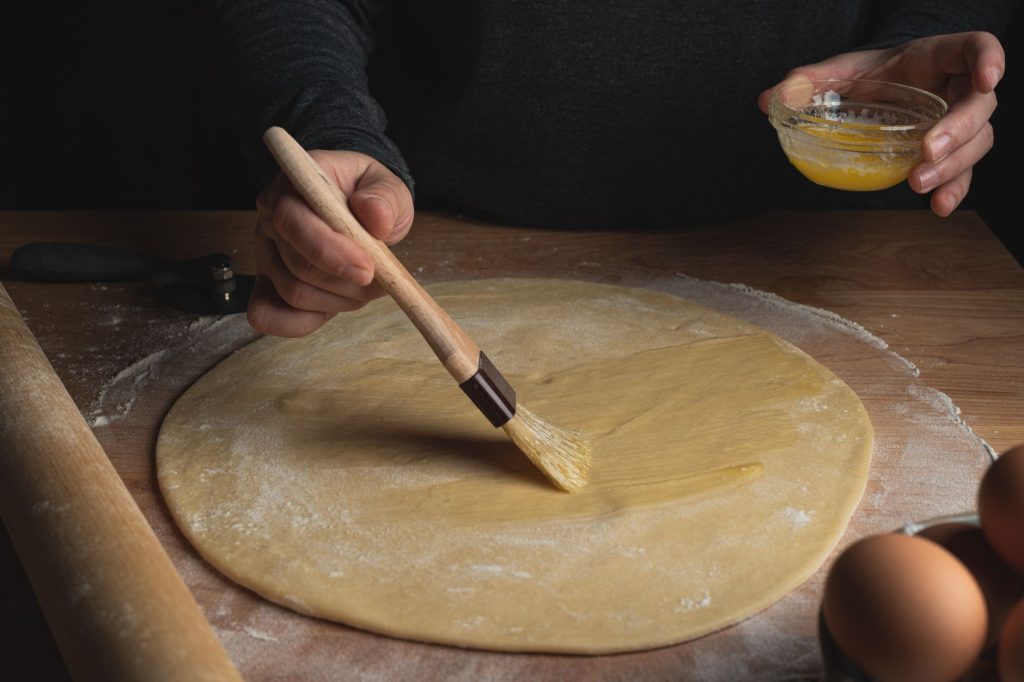
An egg wash does three jobs at once: it makes the surface shine, it speeds up browning, and it glues seeds, sugar or breadcrumbs onto the crust. Most stand-in liquids can only do one or two of those jobs well, which is why the right egg wash substitute depends on what you are actually baking. This matrix ranks the common swaps by job so you can pick one that matches the bake instead of guessing.
Quick answer: For shine and deep browning on bread or pastry, use milk or cream. For adhesion when breading, use milk, plant milk, or a light oil. Aquafaba is the closest all-purpose vegan match. Maple syrup and oil give color but almost no true shine.
| Wash | Shine | Browning | Adhesion (seeds/breading) | Best used on | Vegan / dairy-free |
|---|---|---|---|---|---|
| Whole milk | Low-medium | Medium | Medium-high | Bread, breading | No (dairy) |
| Heavy cream | Medium | High | Medium | Pie, pastry, scones | No (dairy) |
| Melted butter | Medium-high | High (can over-brown fast) | Low-medium | Pie tops, biscuits | No (dairy) |
| Aquafaba (bean liquid) | Medium-high | Medium | High | Bread, pastry, breading | Yes |
| Maple syrup, thinned with water | Low | Medium-high (browns fast, watch closely) | Low | Sweet pastry, cinnamon rolls | Yes |
| Neutral oil | Low | Low-medium | Medium (good for breading) | Breading, savory pastry | Yes |
| Unsweetened plant milk (soy or oat) | Low-medium | Medium | Medium-high | Bread, breading | Yes |
| Melted vegan butter | Medium | Medium-high | Low-medium | Pie, pastry | Yes |
How to read the finish matrix
Shine, browning and adhesion are separate properties, and an egg wash substitute rarely delivers all three the way whole egg does. Shine comes mostly from protein and fat coating the surface as it bakes. Browning comes from sugar and protein reacting with heat, the same Maillard process that colors a seared steak. Adhesion is just stickiness before the bake starts, which is why thin liquids like plain water do almost nothing here.
Because these are separate axes, the practical move is to pick the wash based on which property matters most for the specific bake, not to look for one universal answer.
Best egg wash substitute by bake type
Bread
For a shiny, deeply colored crust on rolls or loaves, milk or a soy-based plant milk gets you closest to egg-wash results because the protein content supports browning. Aquafaba is the stronger vegan pick if the loaf is topped with seeds, since it dries slightly tacky and holds them in place better than milk alone. Expect a softer sheen than true egg wash, not a glassy one.
Pie
Pie crust benefits from cream or melted butter brushed on just before the bake. Cream gives the most even browning across a fluted edge, while melted butter browns faster and can scorch thin edges if the oven runs hot, so watch the last few minutes rather than trusting the timer alone. For a dairy-free pie, a plant-based cream alternative or melted vegan butter gets a similar effect. The Dairy Free Butter Substitute Swap Matrix covers which swaps behave closest to real butter under heat.
Pastry (laminated dough, danishes, croissants)
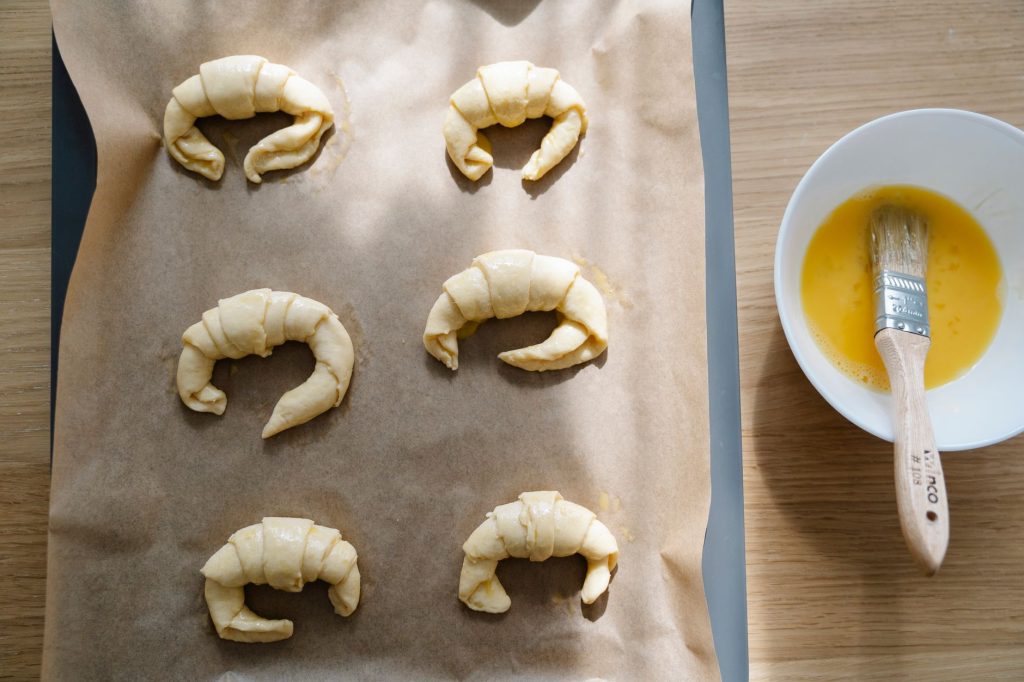
Laminated doughs show every brushstroke, so a wash that is too thick will pool in the layers. Milk thinned with a small amount of water, or aquafaba used at full strength, spreads evenly without dragging the delicate top layers. Maple syrup thinned with water works well on sweet pastry but browns quickly, so it is better added partway through baking rather than at the start.
Breading (cutlets, tenders, fried or baked coatings)
For breading, adhesion matters more than shine. Milk, plant milk, or a thin coat of neutral oil all hold breadcrumbs on well enough for a standard dredge. Oil is the easiest all-in-one option since it also helps the coating brown in the oven or air fryer without a separate wash step. If the breading goes on raw meat or poultry, the wash choice does not change the food safety requirement: cook to the USDA safe minimum internal temperature (165F for poultry; check the USDA FSIS table for other proteins) and confirm with a thermometer rather than by color alone, since breaded coatings can look done before the inside is fully cooked. A basic instant-read thermometer settles that question in seconds.
Vegan and dairy-free options
Aquafaba, the liquid from a can of chickpeas, is the most versatile dairy-free and egg-free wash because its proteins behave more like egg white than any plant milk does. Use it straight from the can, undiluted, brushed on in a thin even coat. Plant milks work as a lighter alternative when you want subtle color rather than heavy shine, and soy milk browns slightly better than oat or almond milk because it carries more protein. For guidance on which plant milk performs closest to dairy in baked goods generally, see the Dairy Free Milk Substitute: Best Pick by Job guide.
What changes the result
- Oven calibration: Home ovens can run hotter or cooler than the dial suggests, which shifts browning speed. If crusts consistently over-brown or stay pale, an oven thermometer is a cheap way to confirm actual temperature rather than guessing from bake time.
- Coat thickness: A heavy brushstroke pools in creases and browns unevenly. A thin, even layer applied with a soft-bristle brush gives more consistent color across the surface.
- Sugar content of the wash: Maple syrup and other sweetened washes brown faster than milk or aquafaba because sugar caramelizes at a lower temperature than protein browns.
- Dough surface: Enriched, buttery dough already contains fat that browns on its own, so a light wash goes further than it would on a lean, low-fat dough.
- Timing of application: Washing right before the bake versus partway through changes how much color develops; a mid-bake touch-up wash is a common fix for pastries that need more shine without over-browning.
Common mistakes
- Using plain water as a wash. It adds no protein, sugar or fat, so it does nothing for shine or browning and very little for adhesion.
- Brushing on a thick, uneven coat, which pools in seams and bakes unevenly, especially on laminated pastry.
- Applying maple syrup or another sugar-heavy wash too early in a long bake, leading to a crust that browns before the inside is done.
- Assuming any dairy-free wash will match egg-wash shine exactly. Expect a softer, more matte finish and plan the topping (seeds, sugar) to do some of the visual work instead.
- Skipping the internal temperature check on breaded meat or poultry because the coating looks golden. Color is not a doneness signal; a thermometer reading against the USDA minimum is.
FAQ
What is the best egg wash substitute for shine on bread?
Milk gives a reasonable sheen, and aquafaba comes closer to true shine while also holding seeds in place. Neither matches a whole-egg wash exactly, but both are workable for a home bake.
Can I use just melted butter instead of egg wash?
Yes, especially on pie tops and biscuits, but watch it closely near the end of baking since butter tends to brown faster than milk or cream and can scorch thin edges.
What is a good vegan egg wash for pastry?
Aquafaba used undiluted is the closest match for shine and adhesion. Thinned plant milk works for a lighter, more matte finish on delicate laminated dough.
Does oil work as an egg wash for breaded chicken?
A thin coat of neutral oil helps breading brown and crisp in the oven or air fryer, though it will not add shine the way milk or egg does. Always confirm the chicken reaches the USDA safe minimum internal temperature of 165F with a thermometer, regardless of the wash used.
Practical recommendation
If shine and browning matter most, reach for milk or cream first and butter when a faster, richer color is the goal. If the bake is vegan or dairy-free, aquafaba is the single most versatile substitute across bread, pie and pastry, with a light oil as the simplest option for breading. A soft-bristle pastry brush, like this style of silicone pastry brush, applies any of these washes in a thin, even coat, which matters more for the final result than which liquid you pick.