Quick Recipe Finder is a participant in the Amazon Services LLC Associates Program. If you buy through links on this page we may earn a commission, at no extra cost to you. Cooking times are guidance and vary by appliance. Always confirm doneness with a thermometer against USDA safe minimum internal temperatures.
Frozen chicken thighs, drumsticks, and whole birds don’t follow the breast guide, and guessing usually means either rubbery meat or a pink center at the bone. The time depends on the cut, the weight, and whether it’s bone-in, and the appliance clock is only a starting point.
Quick answer: Most frozen chicken cuts need roughly 10 to 15 minutes at high pressure, and a frozen whole chicken needs about 6 to 8 minutes per pound. Always confirm doneness with a thermometer, since the USDA safe minimum internal temperature for poultry is 165F.
| Cut | Weight / Size | Frozen: High Pressure Time | Fresh: High Pressure Time | Recommended Release |
|---|---|---|---|---|
| Boneless, skinless thighs | 1 to 2 lbs | 8 to 10 minutes | 6 to 8 minutes | Quick release |
| Bone-in, skin-on thighs | 1 to 2 lbs | 12 to 15 minutes | 8 to 10 minutes | Natural release 5 min, then quick |
| Drumsticks | 1 to 1.5 lbs | 10 to 12 minutes | 6 to 8 minutes | Quick release |
| Wings | 1 to 1.5 lbs | 8 to 10 minutes | 5 to 6 minutes | Quick release |
| Tenders / strips | 1 lb | 5 to 6 minutes | 3 to 4 minutes | Quick release |
| Whole chicken | per pound | 6 to 8 minutes per lb | 5 to 6 minutes per lb | Natural release 10 to 15 min |
| Boneless, skinless breast | see dedicated guide | Timing differs enough by thickness that it has its own chart. See How Long to Pressure Cook Chicken Breast: Fresh vs Frozen. | ||
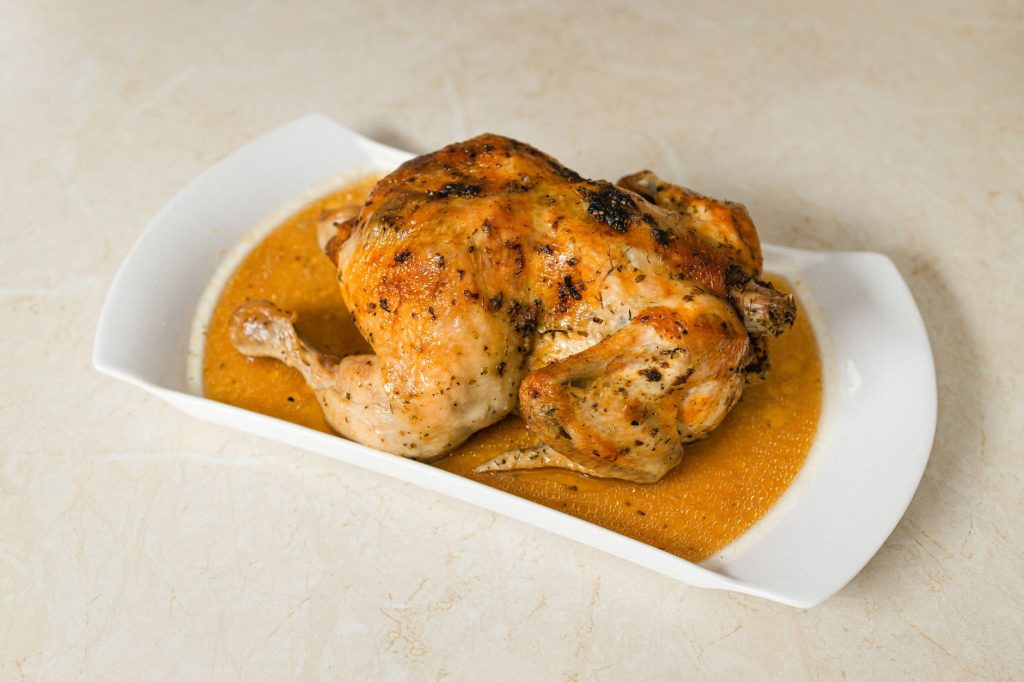
How Long to Pressure Cook Frozen Chicken by Cut
These ranges assume the pieces are separated or at least not frozen into one solid block, standard electric pressure cooker settings, and enough liquid in the pot (usually a cup or so) to reach pressure. A whole frozen chicken, in particular, is easiest to time per pound rather than as a flat number, since a 3 lb bird and a 6 lb bird are not the same job.
Thighs
Boneless thighs cook faster than bone-in because there’s no bone slowing heat transfer to the center. If your thighs are stacked more than two deep or partially fused together from freezing, add a few minutes and check the thickest one with a thermometer before assuming it’s done.
Drumsticks and Wings
Smaller bones and thinner meat mean drumsticks and wings sit toward the shorter end of the range even frozen. Wings especially can overcook fast if left on the longer end, so if you’re aiming for wings that hold together well rather than fall-apart tender, start at the low end of the window.
Whole Chicken
Per-pound timing works better than a flat number here because a small fryer and a large roaster behave very differently under pressure. Plan for roughly 6 to 8 minutes per pound at high pressure starting from frozen, then a natural release of 10 to 15 minutes before venting the rest. Skip a thermometer check on a whole bird at your own risk, since the thigh joint, the breast, and the area near the cavity can all finish at different rates.
Frozen vs Fresh: Why the Gap Matters
Frozen chicken generally needs somewhere between 30 and 50 percent more time than the same cut fresh, because the pressure cooker first has to bring the interior up from freezing before it can start actually cooking the meat through. That gap narrows for thin cuts like tenders and widens for dense cuts like bone-in thighs or a whole bird, which is why the table above lists both columns separately rather than a single multiplier.
If you’re used to cooking fresh chicken and switching to frozen for convenience, resist the urge to just add a flat few minutes to your usual fresh time. The extra time needed is proportional to size and density, not a fixed offset, so a small frozen drumstick and a large frozen bone-in thigh don’t need the same bump.
What Changes the Number
- Starting temperature: Chicken straight from a deep freeze needs more time than chicken that’s been in the fridge for a day or partially thawed on the counter. If you’re not sure how frozen it really is, time for fully frozen and check early.
- Piece size and thickness: A thick bone-in thigh and a thin one from the same package can differ by several minutes at the center even with identical labeled weight.
- Bone-in vs boneless: Bone slows heat penetration, so bone-in cuts consistently need more time than boneless cuts of similar weight.
- How the pieces are packed: Chicken frozen in a solid clump takes longer than pieces that were flash-frozen individually and separate easily, since the center of a clump behaves like one much larger piece.
- Appliance model: Pressurization speed, valve behavior, and even altitude all vary by model and location, so the same setting on two different pressure cookers won’t always produce identical results. Treat the table as a starting point and adjust based on what you see at the vent and what the thermometer reads.
- Liquid amount: Too little liquid can mean the cooker never reaches full pressure, which throws off every time in this article.
Release Method: Quick vs Natural
Smaller, thinner cuts like tenders, wings, and boneless thighs generally do fine with a quick release right after the cook time ends, since there’s less mass to keep cooking during a rest. Larger or bone-in cuts, and especially a whole chicken, benefit from a short natural release of 5 to 15 minutes first, which lets the temperature even out through the thickest parts before you open the valve. Venting a whole frozen chicken immediately after cook time often leaves the area near the bone under 165F even when the outer meat looks fully done.
An instant-read thermometer is the one tool that removes the guesswork here. Check the thickest part of the piece, avoiding bone, and don’t rely on juice color or texture alone.
Common Mistakes
- Treating frozen and fresh times as the same: even a 5 minute shortfall can leave the center of a bone-in piece unsafe.
- Stacking a solid block of frozen chicken: pieces frozen together take much longer to cook through than the same weight separated, since the pot is effectively cooking one large mass.
- Skipping the thermometer on a whole chicken: the breast, thigh, and area near the cavity can finish at different times, so one check point isn’t enough.
- Not enough liquid: if the cooker can’t reach pressure, none of these times apply, and you’ll end up with an error code or undercooked chicken.
- Quick releasing a whole bird immediately: this often leaves the interior below 165F even when the outside looks finished.
If you’re also cooking other frozen proteins on a schedule, the timing logic is similar to what’s covered in How Long to Cook Frozen Meatballs in Crock Pot (Chart): starting temperature and piece size matter more than any single fixed number.
FAQ
Can you pressure cook chicken from frozen without thawing?
Yes. Pressure cookers are well suited to frozen chicken because the sealed, high-pressure environment cooks through dense or icy meat faster than most other methods. Follow the time ranges in the table above based on cut and weight, and confirm the final temperature with a thermometer.
How long to pressure cook a frozen whole chicken?
Plan for roughly 6 to 8 minutes per pound at high pressure, followed by a natural release of 10 to 15 minutes. A 4 lb frozen chicken lands somewhere around 24 to 32 minutes of cook time before the release, but check the thigh joint and thickest part of the breast before serving.
Is it safe to pressure cook frozen chicken thighs?
Yes, as long as the internal temperature reaches the USDA safe minimum of 165F by the time you serve it. Bone-in thighs need more time than boneless ones of similar weight, so check the ranges in the table and verify with a thermometer rather than the clock.
Do frozen chicken wings need natural release?
Not usually. Wings are thin enough that a quick release right after cook time is generally fine. Natural release is more useful for larger or bone-in cuts and whole birds, where a short rest helps the center catch up to the outside.
Practical Recommendation
Start with the time in the table that matches your cut and weight, use a quick release for thin or boneless pieces and a short natural release for anything bone-in or whole, and finish every cook with a thermometer check at the thickest point. If your appliance runs differently than expected, note the adjustment for next time rather than trusting the same number blind. For breast meat specifically, use the dedicated chicken breast fresh vs frozen guide instead of the ranges here.