Quick Recipe Finder is a participant in the Amazon Services LLC Associates Program. If you buy through links on this page we may earn a commission, at no extra cost to you. Cooking times are guidance and vary by appliance. Always confirm doneness with a thermometer against USDA safe minimum internal temperatures.
Frozen french fries are one of those foods that the air fryer genuinely improves on the microwave or standard oven, but the right time depends on which cut is in the bag and how full the basket is. A shoestring fry and a steak-cut wedge are not the same cooking problem, and treating them the same is the most common reason for a batch that comes out soggy in the middle or burnt on the ends.
Quick answer: Most frozen french fries cook at 375 to 400°F for 10 to 18 minutes depending on the cut and batch size, with at least one shake around the halfway point. Thin cuts like shoestring finish fastest; thick cuts like steak fries and tots take longest. Judge doneness by color and crunch, not the clock.
| Cut | Temperature | Small batch (1-2 servings, single layer) | Full basket (3-4 servings) | Shake schedule |
|---|---|---|---|---|
| Shoestring / thin-cut | 375-400°F | 7-10 min | 10-13 min | Shake once at the halfway mark |
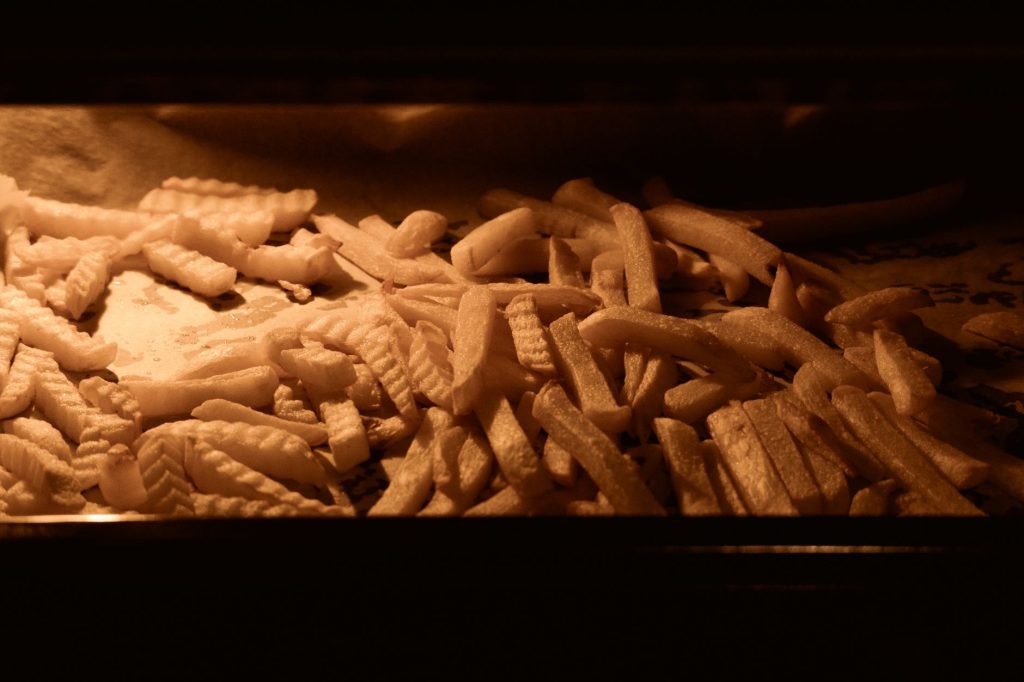
| Crinkle-cut | 375-400°F | 9-12 min | 12-16 min | Shake at halfway, check again a few minutes later |
| Waffle fries | 380-400°F | 8-11 min | 11-15 min | Shake or flip once at halfway |
| Steak fries / wedges | 375-400°F | 12-16 min | 16-20 min | Shake twice, roughly at the one-third and two-thirds marks |
| Tater tots / potato crowns | 380-400°F | 10-14 min | 14-18 min | Shake or toss once at halfway |
These are starting ranges, not fixed answers. Air fryer baskets vary in size and heating pattern, bag instructions differ by brand, and how much is crammed into the basket changes everything downstream. Use the table to set your first attempt, then adjust by two or three minutes next time based on what you saw.
How to Cook Frozen French Fries in Air Fryer by Cut
The cut matters more than the brand because it determines surface area and moisture content. Thin cuts have more exposed surface relative to their volume, so hot air strips moisture off quickly and they crisp fast but can go from done to dry in a narrow window. Thick cuts hold more interior moisture and need the longer end of the time range to actually cook through rather than just browning on the outside while staying soft in the middle.
Shoestring and crinkle-cut
These are the most forgiving cuts because they are already thin enough that even a slightly short cook still tastes done. Spread them as close to a single layer as the basket allows. Crinkle-cut fries have ridges that trap a bit more oil and moisture in the grooves, which is why they generally need a minute or two longer than straight shoestring fries at the same thickness.
Waffle fries
The waffle shape creates pockets of thick and thin potato in the same piece, so the edges crisp before the thicker cross-sections finish. A shake at halfway redistributes which parts face the heating element and helps even that out.
Steak fries and wedges
These are essentially small roasted potato pieces and behave accordingly. Plan for the long end of the range, and expect two shakes rather than one since a thick wedge left in the same position the whole time will brown unevenly on one face.
Tater tots and potato crowns
Tots are molded from shredded potato rather than cut from a whole one, so their texture target is different: you want the shell to go from pale and soft to golden and firm, with the inside staying soft rather than drying out. Toss rather than flip to avoid breaking them apart.
What Changes the Number
- Batch size and overlap. A single layer with space between pieces cooks faster and more evenly than a packed basket. Doubling the quantity does not just double the time, it can also mean the fries steam each other in the middle of the pile instead of crisping. If you are cooking for a crowd, do it in two batches rather than one overloaded one.
- Starting temperature. Fries straight from a deep freezer take slightly longer than ones that sat on the counter for ten minutes or came from a less-cold chest freezer. This is a minor variable but it explains why the same bag can behave a little differently week to week.
- Appliance model. Basket-style air fryers, oven-style air fryers, and toaster-oven air fryer combos all distribute heat differently, and wattage and basket shape are not standardized across brands. Treat the times above as a starting point for your specific unit and adjust after the first run.
- Oil coating. Most frozen fries are pre-coated with a light oil film at the factory, which is part of why they crisp well in dry heat. A light extra mist of oil can help thicker cuts like steak fries brown more evenly, but it is optional, not required.
- Preheating. Some manufacturers recommend preheating the basket for a few minutes before adding fries. This shortens total cook time slightly and gives a better initial crisp on the outside layer, especially for thin cuts.
The Soggy-Batch Troubleshooting Path
If a batch comes out limp, pale, or soft in spots, the fix depends on which symptom you actually saw. Work through these in order.
Problem: fries are soft all over, not just in one spot
This almost always means the basket was overloaded. If the fries were piled more than one layer deep, the ones in the middle of the pile were steaming in trapped moisture instead of getting direct hot air contact. The fix is a smaller batch per run, spread out, even if that means running the air fryer twice.
Problem: soggy or pale on the bottom, crisp on top
This points to a basket liner or parchment sheet that is blocking airflow from underneath, or a basket that was not shaken at all during the cook. A solid liner under a full layer of fries can trap steam against the bottom surface. If you like using a liner for cleanup, choose a perforated air fryer liner rather than a solid sheet, and still shake the basket at least once.
Perforated air fryer liners let hot air circulate underneath the food instead of trapping moisture against a solid sheet, which matters more for fries than for most other frozen foods.
Problem: crisp on the outside, cold or starchy-tasting in the center
This is usually a thick-cut problem: a steak fry or thick wedge browned on the outside before the center had time to finish. The fix is dropping the temperature slightly, around 350 to 365°F, and extending the time so the inside catches up before the outside overcooks.
Problem: uneven batch, some pieces done and some not
Mixed doneness in the same batch is a shake-frequency issue, not a time issue. Thicker cuts need two shakes rather than one, and pieces near the edge of the basket often cook faster than ones in the center regardless of cut. Tossing more often evens this out without changing total time much.
Common Mistakes
- Cooking a full bag at once in a basket sized for a small appliance. If you are regularly cooking for more than two people, weighing a portion against the bag’s serving size on a kitchen scale takes the guesswork out of how much fits in one even layer.
- Skipping the shake because the basket looks fine on top. The pieces touching the basket mesh cook differently from the ones stacked above them even in a shallow layer.
- Judging doneness by time alone instead of color and texture. Appliance wattage and basket airflow vary enough between models that the same bag can need a few extra minutes in one air fryer and a few less in another.
- Adding oil to fries that are already factory-coated, which can make them greasy rather than crisper.
- Not preheating when the bag instructions call for it, then wondering why the first few minutes feel wasted on a basket that was not yet hot.
A digital kitchen scale is an easy way to keep batch sizes consistent across cooks, which matters more for fries than most frozen foods since overloading the basket is the single biggest cause of a soggy result.
FAQ
Do you need to preheat the air fryer for frozen french fries?
It is not strictly required, but preheating for a few minutes can give thin cuts a better initial crisp and shave a minute or two off total time. Check your bag’s instructions and your air fryer’s manual, since some models build preheating into their cycle automatically.
Should you add oil to frozen french fries in the air fryer?
Usually not. Most frozen fries are pre-coated with oil at the factory specifically so they crisp in dry heat. A light extra mist can help very thick cuts like steak fries brown more evenly, but it is optional and too much will make them greasy rather than crisp.
Why are my air fryer fries soggy instead of crispy?
The most common cause is overcrowding the basket so pieces steam each other instead of getting direct hot air. The next most common cause is skipping the shake, followed by using a solid liner that blocks airflow underneath. Work through the troubleshooting path above to isolate which one applies.
What temperature is best for frozen french fries in an air fryer?
375 to 400°F covers most cuts and most appliance models. Thinner cuts tend to do well at the higher end of that range for a shorter time, while very thick wedges sometimes benefit from a slightly lower temperature, around 350 to 365°F, for a longer stretch so the center finishes before the outside overcooks.
Bottom Line
Start with 375 to 400°F, use the time range that matches your cut and batch size from the table, and shake at least once (twice for thick cuts). If a batch comes out soggy, the fix is almost always a smaller, more spread-out batch and a proper shake schedule rather than more time. If you are rounding out an air fryer meal with other frozen items, the timing logic is similar to what applies in guides like Frozen Burrito in Air Fryer: Times by Brand and Size and Frozen Mozzarella Sticks in Air Fryer (No-Burst Times), where batch size and shake timing matter just as much as the headline number.