Quick Recipe Finder is a participant in the Amazon Services LLC Associates Program. If you buy through links on this page we may earn a commission, at no extra cost to you. Cooking times are guidance and vary by appliance. Always confirm doneness with a thermometer against USDA safe minimum internal temperatures.
Lentils cook fast under pressure, but the right time depends entirely on which lentil you’re holding. Red split lentils can turn to porridge in the time it takes brown lentils to barely soften. This chart breaks the timing down by variety so you don’t have to guess.
Quick answer: Red and yellow split lentils need about 1 to 3 minutes at high pressure, brown and black lentils need about 6 to 9 minutes, and whole green or French green lentils need about 8 to 12 minutes. Use a natural release of 10 minutes for whole varieties and a quick release for splits.
| Lentil type | High pressure time | Liquid ratio (lentil:liquid) | Release method | Texture result |
|---|---|---|---|---|
| Red or pink split | 1 to 3 minutes | 1:2 to 1:2.5 | Quick release | Soft, breaks down easily (good for dal, soup base) |
| Yellow split | 1 to 3 minutes | 1:2 to 1:2.5 | Quick release | Soft, similar to red split |
| Brown lentils | 6 to 8 minutes | 1:2.5 to 1:3 | Natural release, 10 min, then quick release | Tender but holds some shape |
| Green lentils (whole, not French) | 8 to 10 minutes | 1:2.5 to 1:3 | Natural release, 10 min | Firm-tender, holds shape well |
| French green (Puy) lentils | 10 to 12 minutes | 1:2.5 to 1:3 | Natural release, 10 min | Firm, keeps structure, good for salads |
| Black (beluga) lentils | 7 to 9 minutes | 1:2.5 to 1:3 | Natural release, 10 min | Tender with firm skin, holds shape |
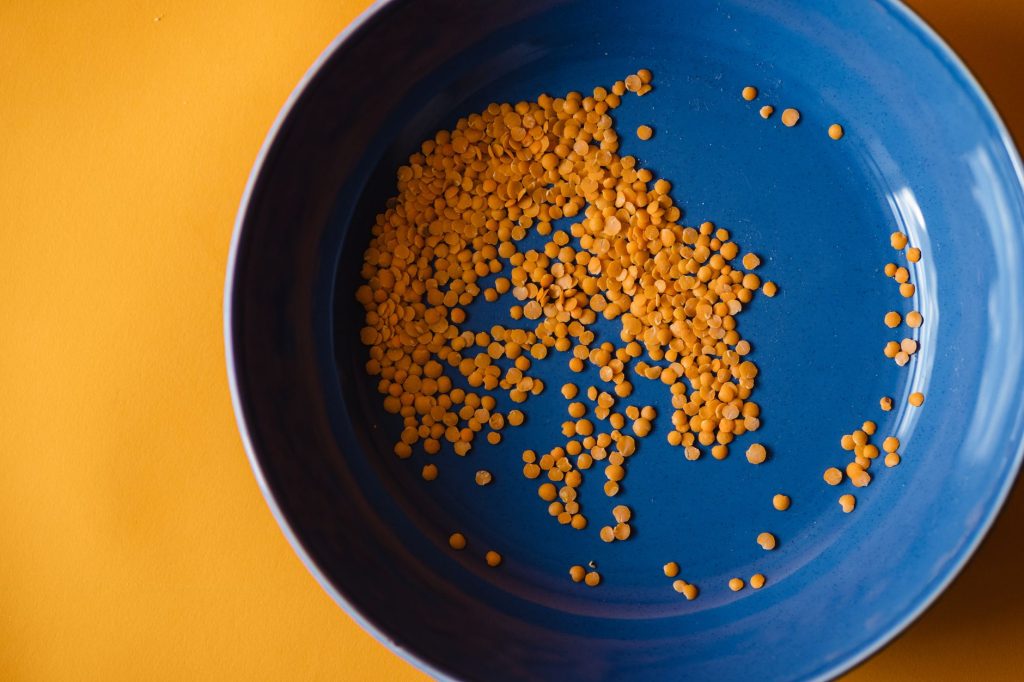
How long to cook lentils in Instant Pot by variety
The split varieties, red and yellow, have had their hulls removed and are cut in half. That structural change is why they cook in a couple of minutes and fall apart readily, which is exactly what you want for a smooth soup or dal base. Whole lentils with the skin intact, like brown, green, French green, and black, hold their shape much longer and need several more minutes under pressure to soften all the way through.
These times assume lentils cooked straight from dry, no soaking, in a standard 6-quart or 8-quart electric pressure cooker at sea level. If you want them softer for mashing, add a minute or two. If you want them firm for a salad or grain bowl, stay at the low end of the range and check texture before adding any more time.
Why natural release matters for whole lentils
A natural release lets the lentils finish cooking gently in residual steam and heat without the pressure drop agitating them into mush. For split lentils, which are already heading toward soft, a quick release right after the timer ends keeps them from overcooking further. For whole lentils, a short natural release of around 10 minutes evens out the texture before you vent the rest of the pressure manually.
What changes the number
The times above are a starting point, not a guarantee, because several variables shift how lentils behave under pressure.
Age and dryness of the lentils
Lentils that have been sitting in a pantry for a year or more take longer to soften than lentils bought recently. There’s no reliable way to know a lentil’s age just by looking at it, so if a batch seems to need extra time compared to the chart, that’s likely why. Add pressure time in small increments rather than guessing high on the first try.
Quantity in the pot
Doubling the amount of lentils does not mean doubling the time, since pressure cooking time is mostly about the lentil’s own thickness and structure reaching temperature, not the total mass. What changes is how long the pot takes to come up to pressure and release it, which affects total cook time even if the pressure-cooking minutes stay the same.
Altitude
Water boils at a lower temperature at higher elevation, so pressure cooking at altitude generally needs a bit more time. If you’re above around 3,000 feet, add a minute or two to whole lentil varieties and check doneness before serving.
Salt and acid added before cooking
Salt added in small amounts before cooking is usually fine, but acidic ingredients like tomatoes, vinegar, or wine can slow softening significantly or stop it altogether if added before the lentils are tender. Add those ingredients after pressure cooking, once the lentils have reached the texture you want.
Appliance model
Pressure cooker behavior varies by brand and model, including how quickly each one comes to pressure and how precisely it holds it. If your results consistently run firmer or softer than the chart across multiple lentil varieties, treat your own appliance’s pattern as the more reliable guide going forward.
Common mistakes
- Not accounting for foam. Red and yellow split lentils foam as they cook, and that foam can rise into the pressure valve and cause a clog or a false burn warning. A tablespoon of oil in the pot helps reduce foaming, and keeping the pot filled to no more than half capacity with lentils and liquid also helps.
- Using the wrong liquid ratio. Too little liquid risks a burn notice, since the pot needs enough liquid to build steam. Too much liquid for split lentils turns them into a thin soup faster than expected. Stick to the ratio range in the chart and adjust after you see the result.
- Skipping a rinse. Lentils can carry dust or small debris from packaging. Rinsing in a fine mesh strainer before cooking also removes some of the starch that contributes to foaming.
- Adding acidic ingredients too early. As noted above, tomatoes or vinegar added before cooking can leave lentils stubbornly firm no matter how long you cook them.
- Treating all lentils as one ingredient. A recipe that says “lentils” without specifying the type is the single biggest source of timing confusion. Always check which variety you’re holding before setting the timer.
A fine mesh strainer makes rinsing fast and also doubles as a way to check for any stones or debris that sometimes turn up in bagged dry lentils.
FAQ
Do lentils need soaking before cooking in the Instant Pot?
No. Lentils are one of the few legumes that don’t require soaking before pressure cooking, since they’re small enough to cook through from dry in the times listed above. Soaking can shave a minute or two off the time for whole varieties, but it’s optional, not necessary.
Can you overcook lentils in an Instant Pot?
Yes, especially red and yellow split lentils, which can go from tender to fully dissolved within a minute or two of extra time. Whole varieties are more forgiving but will still turn mushy with too much time or too long a natural release. When in doubt, err toward the low end of the range and extend with a quick additional minute if needed.
What is the lentil to water ratio for the Instant Pot?
A general starting ratio is 1 cup of dry lentils to 2 to 3 cups of liquid, with split lentils needing less liquid and whole lentils needing a bit more. If you plan to serve the lentils as a soup rather than a side dish, lean toward the higher end of that ratio.
Why do my red lentils trigger a burn notice?
Red lentils release starch as they cook, and that starch can settle and scorch on the bottom of the pot before the lentils and liquid build enough steam. Stirring in a little oil, using the full liquid amount called for, and giving the pot a quick stir before sealing the lid all reduce the risk.
Practical recommendation
Match the time to the lentil in front of you, not to a single number you remember from somewhere else. Start at the low end of the chart’s range for your variety, use a quick release for split lentils and a short natural release for whole ones, and check texture before deciding whether a few more minutes are needed. If you’re building out a broader pressure cooker routine, the Instant Pot Beets Time Chart by Size and the Slow Cooker Time Chart by Protein and Cut cover other ingredients where the “one number fits all” answer falls apart the same way it does with lentils.