Quick Recipe Finder is a participant in the Amazon Services LLC Associates Program. If you buy through links on this page we may earn a commission, at no extra cost to you. Cooking times are guidance and vary by appliance. Always confirm doneness with a thermometer against USDA safe minimum internal temperatures.
Flank steak is thin, lean, and uneven in thickness, which means it moves through doneness stages faster than a thick ribeye and punishes anyone who walks away from the grill. The window between medium-rare and dry shoe leather is short, so the clock is only a starting point. Here is the time and temperature breakdown by thickness and grill heat, plus the pull temp that actually tells you when to take it off.
Quick answer: For a 1-inch thick flank steak over high heat (450F to 500F), grill about 5 to 6 minutes per side to reach 140F to 145F, which is medium. Thinner steaks cook faster and thicker ones take longer, so confirm doneness with an instant-read thermometer instead of a timer.
| Doneness | Pull Temp | 3/4 inch thick (per side) | 1 inch thick (per side) | 1.25 to 1.5 inch thick (per side) |
|---|---|---|---|---|
| Rare | 120F to 125F | 3 to 4 min | 4 to 5 min | 5 to 6 min |
| Medium-rare | 130F to 135F | 4 to 5 min | 5 to 6 min | 6 to 7 min |
| Medium | 140F to 145F | 5 to 6 min | 6 to 7 min | 7 to 9 min |
| Medium-well | 150F to 155F | 6 to 7 min | 7 to 8 min | 9 to 10 min |
| Well-done | 160F and above | 7 to 9 min | 9 to 11 min | 11 to 13 min |
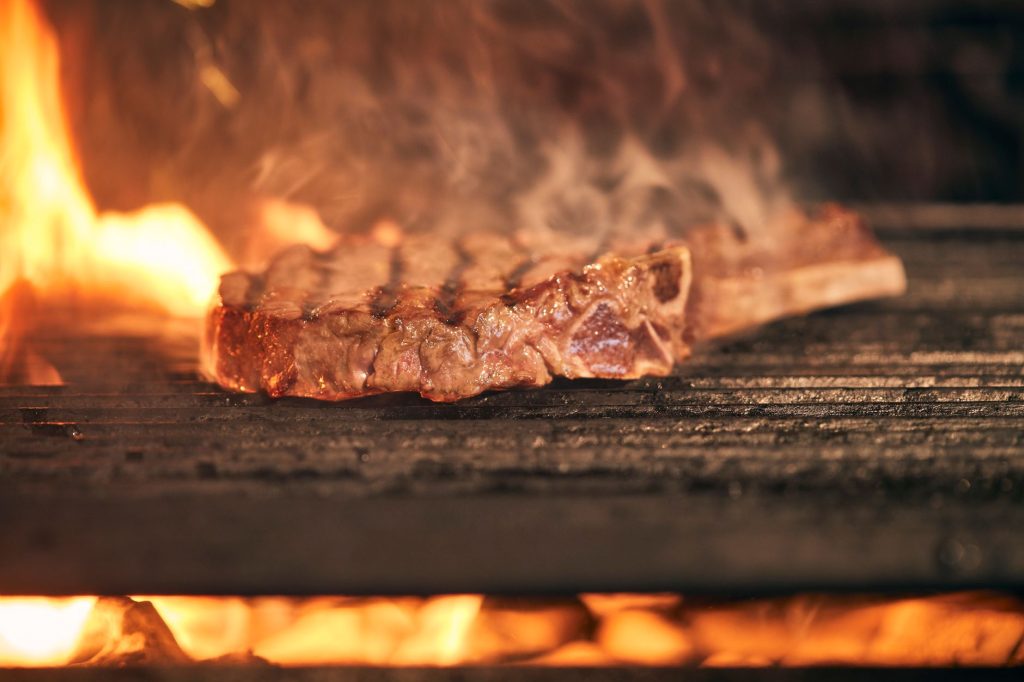
These times assume direct high heat, roughly 450F to 500F at the grate, which is the standard approach for flank steak because the cut is thin enough to cook through before the surface can build a proper sear at lower heat. All times are ranges, not guarantees, because grill hardware and steak shape vary too much for a single number to hold across every kitchen.
Flank Steak Grill Time by Thickness at Lower Heat
If your grill runs closer to 400F, or you are cooking at medium-high instead of high because of flare-ups or a thicker piece, plan for roughly 30 to 50 percent longer per side than the high-heat numbers above. A 1-inch steak that takes 6 minutes a side at 450F might need 8 to 9 minutes a side at 400F. Lower heat is a reasonable tradeoff if you are worried about scorching the outside before the inside catches up, but you lose some of the char that flank steak depends on for flavor, so most grilling guidance leans toward high heat and a shorter total cook.
How to Use This Chart
Start by measuring the steak at its thickest point, not the thin tapered end, since that thick section is what determines when the whole piece is safe and cooked the way you want. Preheat the grill and let it hold steady at your target zone for a few minutes before the steak goes on. Flip once, at the halfway point of the per-side range for your thickness and doneness, then start checking temperature with an instant-read thermometer inserted into the thickest part rather than an edge or a tapered corner, which will always read higher than the center.
A reliable instant-read thermometer is the one tool that removes the guesswork here, since flank steak’s uneven thickness means visual cues like color or firmness are unreliable across the whole piece.
What Changes the Number
Thickness and shape
Flank steak is rarely a uniform slab. Most run from about 3/4 inch to 1.5 inches, and many pieces taper from thick in the center to thin at the ends. That means the thin ends can hit medium-well while the center is still medium-rare. Some people trim the thinnest section and cook it separately for a shorter time, or fold the thin end under itself before grilling to even out the thickness.
Starting temperature
A steak straight from the fridge takes longer to reach a given internal temperature than one that has sat at room temperature for 20 to 30 minutes before grilling. If you skip the rest time, add a minute or two to each side and rely more heavily on the thermometer than the clock.
Grill type and hot spots
Gas grills, charcoal grills, and pellet grills all behave differently, and even two grills of the same type can run hot on one side and cooler on another. Appliance behavior varies by model, so treat the grill temp column as a target for the grate surface near the steak, not a universal constant, and use an oven thermometer or grill-mounted probe if your built-in gauge seems off.
Direct heat vs indirect, and lid position
Flank steak is almost always cooked over direct heat with the lid up or only briefly closed, since the goal is a fast sear rather than slow, even cooking. Closing the lid traps heat and can push the steak toward the next doneness stage faster than expected, so check earlier if you are grilling with the lid down.
Carryover after resting
Pulled steak keeps cooking for a few minutes off the grill as residual heat moves toward the center. Internal temperature can climb another 5F to 10F during a 5 to 10 minute rest, so many people pull the steak a few degrees below their final target and let carryover finish the job. Resting also lets juices redistribute, which matters more for flank steak than for thicker cuts because it is cut against the grain in thin slices that will bleed out fast if sliced too soon.
Pull Temperatures and the USDA Minimum
The USDA Food Safety and Inspection Service lists the safe minimum internal temperature for whole cuts of beef, including steaks, at 145F, followed by a 3-minute rest. That number is a food safety floor, not a doneness preference, and it lands right around medium on most charts. If you prefer your flank steak rare or medium-rare, understand that you are choosing a temperature below the published USDA minimum, and decide based on the source and handling of your meat. If you are unsure of the current published figure, check the USDA table directly rather than relying on a secondhand number.
Common Mistakes
- Grilling straight from the fridge. A cold center takes longer to come up to temperature and can leave you with an overcooked exterior by the time the middle catches up.
- Judging doneness by color or time alone. Flank steak’s grain and thinness make the classic finger-press test unreliable. A thermometer reading from the thickest part is the only check that holds up.
- Skipping the rest. Cutting immediately after the grill releases juices onto the board instead of back into the meat, and it also ignores the carryover cooking that finishes the temperature climb.
- Slicing with the grain instead of against it. Flank steak has long, visible muscle fibers. Cutting across them, not parallel to them, is what makes each bite tender instead of chewy.
- Not accounting for the tapered ends. Pulling the whole steak based on a reading from the thin edge means the thick center is likely still underdone.
FAQ
How long to grill flank steak for medium on each side?
For a roughly 1-inch thick flank steak over high heat, plan on about 5 to 6 minutes per side to reach 140F to 145F, which is medium. Thinner or thicker steaks shift that range, so use the thickness table above and confirm with a thermometer.
What temperature is medium flank steak?
Medium is generally 140F to 145F on the pull, with the final resting temperature climbing a few degrees higher. This sits at or just above the USDA safe minimum internal temperature of 145F for whole cuts of beef.
Should you grill flank steak on high heat or medium heat?
High heat, around 450F to 500F, is the standard approach because flank steak is thin enough to cook through before a lower-heat sear has time to develop. Medium heat works but takes roughly 30 to 50 percent longer per side and produces less char.
How long should flank steak rest after grilling?
A rest of about 5 to 10 minutes is typical before slicing. This allows carryover cooking to finish raising the internal temperature slightly and gives the juices time to settle before you cut against the grain.
Practical Recommendation
Pick your target doneness, match it to the thickest part of your steak using the table above, and treat the per-side minutes as a starting estimate rather than a countdown. Pull the steak a few degrees before your final target to account for carryover, rest it, then slice thin and against the grain. If you are also planning a grilled protein with a longer cook time on the same night, the time table in How Long to Cook Pork Tenderloin on the Grill covers a similarly thin, fast-cooking cut, and if you want more detail on how internal temperature and tenderness interact on beef, Internal Temp of Brisket: 145F Safety vs 203F Tenderness lays out that relationship in more depth.