Quick Recipe Finder is a participant in the Amazon Services LLC Associates Program. If you buy through links on this page we may earn a commission, at no extra cost to you. Cooking times are guidance and vary by appliance. Always confirm doneness with a thermometer against USDA safe minimum internal temperatures.
Cheese drawer overflowing, or a block on sale that’s bigger than you’ll use before it molds? The answer depends heavily on what kind of cheese you’re holding and whether it’s a block, shreds, or slices. Some cheese freezes cleanly. Some comes out crumbly and only good for cooking. A little of it isn’t worth freezing at all.
Quick answer: Yes, you can freeze cheese, but texture suffers more as fat and moisture content rise. Hard and semi-soft cheeses freeze reasonably well for 2-8 months and stay useful for cooking and melting. Fresh, soft cheeses tolerate freezing poorly and turn grainy or watery once thawed.
| Cheese Class | Format | Wrap Method | Freezer Life | Thaw Path | Best Post-Thaw Use |
|---|---|---|---|---|---|
| Hard (cheddar, parmesan, gouda, gruyere) | Block | Double wrap in plastic wrap, then a freezer bag with air pressed out | 6-8 months | Fridge, 24-48 hours | Grating, sauces, cooked dishes |
| Hard | Shredded | Freezer bag, pressed flat and sealed | 6-8 months | Use frozen straight into hot dishes, or fridge thaw | Melts, casseroles, toppings |
| Hard | Sliced | Parchment between slices, then freezer bag | 4-6 months | Fridge, 12-24 hours | Grilled sandwiches, melts |
| Semi-soft (mozzarella, monterey jack, provolone) | Block | Wrap tight, then freezer bag | 2-3 months | Fridge, 24 hours | Cooked dishes, pizza, casseroles |
| Semi-soft | Shredded | Freezer bag, flattened | 2-3 months | Use frozen on pizza or in bakes, or fridge thaw | Pizza, baked pasta, gratins |
| Semi-soft | Sliced | Parchment layers, then freezer bag | 2-3 months | Fridge, 12-24 hours | Melted sandwiches only, not fresh eating |
| Fresh (ricotta, cottage cheese, cream cheese, brie) | Block or tub | Airtight container with a little headspace, or original packaging plus a freezer bag | 1-2 months | Fridge, overnight | Baked dishes, cooked spreads, blended fillings |
| Fresh soft-ripened (brie, camembert) | Wheel or wedge | Wrap tight, then freezer bag | 1-2 months | Fridge, 12-24 hours | Baked brie and other cooked appetizers only |
| Processed (American, cheese food, spreads) | Block or slices | Original wrap plus a freezer bag | 2-3 months | Fridge, 12-24 hours | Melts, sandwiches, cheese sauces |
The USDA Food Safety and Inspection Service notes that food held at a constant 0°F stays safe to eat indefinitely. The freezer life numbers above are quality windows, not safety cutoffs. Cheese kept longer than the ranges shown won’t make you sick, but it will lose more texture and flavor the longer it sits.
Can You Freeze Cheese by Class: What Actually Happens
Hard cheese
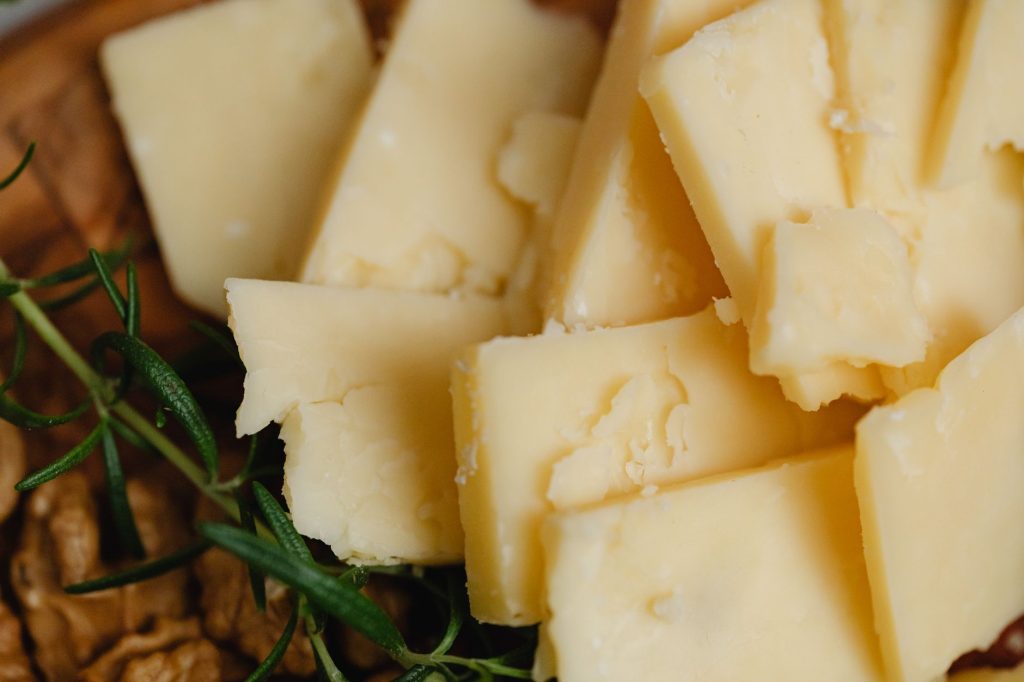
Hard, aged cheese has the least moisture and the most structure, so it’s the best candidate for freezing. Expect some crumbling and a drier, more granular texture after thawing, especially in a block. That’s why hard cheese frozen already shredded is often the more practical choice. It thaws faster and the texture change matters less once it’s melted into something.
Semi-soft cheese
Mozzarella, monterey jack, and provolone sit in the middle. They freeze acceptably for cooking purposes but the moisture that gives them their springy bite tends to separate out during freezing and thaw, leaving a slightly spongy, weepy texture. Plan to use frozen semi-soft cheese in something hot, like a bake or a melt, rather than serving it cold.
Fresh cheese
Ricotta, cottage cheese, cream cheese, and soft-ripened cheeses like brie carry the most water relative to fat. Freezing forms ice crystals that rupture the structure, and on thaw the cheese often separates into curds and liquid. It’s still safe to eat and fine for cooking into a filling or a baked dish where you’re going to stir or blend it anyway, but it won’t hold its original spreadable or sliceable texture.
Processed cheese
American cheese and cheese food products are formulated with emulsifiers that help them hold together through temperature swings, so they freeze a bit more predictably than natural fresh cheese. They still soften and can weep slightly on thaw, but for melts and sandwiches the difference is usually hard to notice.
How to Wrap Cheese for the Freezer
The wrap matters as much as the cheese type. Air exposure is what causes freezer burn and off flavors, not the cold itself.
- Cut large blocks down to portions you’ll actually use in one go before freezing, so you’re not re-thawing the whole thing repeatedly.
- Wrap in plastic wrap or wax paper first to limit direct contact with plastic bag surfaces, then place in a freezer-weight bag with the air pressed out.
- For shredded cheese, spread it in a thin, flat layer inside the bag before sealing. This lets you break off a portion later without thawing the whole bag.
- Label with the date. Six months from now the cheese will look identical to three-month-old cheese, and you won’t remember which is which.
A set of heavy-duty freezer bags designed to resist tearing and hold a seal makes this a lot less fiddly than reusing thin storage bags: heavy-duty freezer bags on Amazon. If you freeze cheese often, a small vacuum sealer removes even more air than a zip-seal bag and noticeably slows freezer burn on longer-stored blocks: vacuum sealer on Amazon.
What Changes the Number
The ranges in the table shift based on a few real variables:
- Fat and moisture content. Higher fat, lower moisture cheeses (parmesan, aged cheddar) hold up longer and change texture less than high-moisture, lower-fat ones.
- Format at freezing time. Pre-shredded or pre-sliced cheese thaws faster and more evenly than a solid block, since the pieces are already broken up.
- Freezer temperature consistency. A freezer that cycles above 0°F regularly, like one that’s opened often or is nearly empty, causes more ice crystal growth than one that holds a steady temperature. Chest freezers and full upright freezers tend to hold steadier than a fridge-top freezer compartment.
- Wrap quality. Air pockets inside the wrap are the main driver of freezer burn, which shows up as dry, discolored patches and a stale off-flavor.
- Age at freezing. Cheese that was already close to its use-by date when frozen won’t gain fresh shelf life back. Freezing pauses further aging, it doesn’t reverse it.
Common Mistakes
- Freezing fresh cheese expecting it to slice cleanly after. Ricotta, cream cheese, and brie almost always separate on thaw. Plan to use them cooked into something rather than served as-is.
- Thawing on the counter. Cheese should thaw in the fridge like most dairy, not at room temperature, both for texture and for food safety around the general danger zone for perishable dairy products.
- Freezing a whole block when you only need a little at a time. Portion first. Re-thawing and re-freezing the same block repeatedly degrades texture fast and is not recommended.
- Skipping the double wrap. A single thin bag lets in enough air over months to cause visible freezer burn, especially on shredded cheese with a lot of surface area.
- Assuming all cheeses behave the same. A method that works fine for shredded cheddar will disappoint with a wheel of brie. Match the approach to the cheese class.
FAQ
Can you freeze shredded cheese straight from the store bag?
Yes. Original shredded cheese bags can go straight into the freezer, though pressing out extra air first or moving it to a proper freezer bag helps limit freezer burn over a multi-month stay.
If you’re stocking the freezer with other everyday staples alongside cheese, our guide to storing green onions in the jar, towel, crisper, or freezer covers a similar low-effort freezer setup for produce you use often.
Does freezing ruin cheese for melting?
No, and melting is actually where frozen cheese performs best. The texture changes that bother people in cold, sliced cheese mostly disappear once the cheese is heated into a sauce, casserole, or pizza topping.
Can you freeze cream cheese?
You can, but expect it to separate into a grainy solid and watery liquid on thaw. It’s fine stirred into a baked cheesecake filling or a cooked dip, but it won’t spread the way it did before freezing. If you want a lower-waste approach that avoids that texture change entirely, using it up fresh or in smaller portions bought as needed is usually the better route.
How long can cheese stay in the freezer before it’s not worth using?
Most cheese stays safe indefinitely at a constant 0°F, per USDA guidance, but quality drops off noticeably past the ranges in the table above. Hard cheese pushing a year and fresh cheese past two or three months are the points where flavor and texture loss usually become obvious rather than subtle.
Bottom Line
Freeze the cheeses built for it. Hard and semi-soft cheese, especially pre-shredded, freezes well enough that it’s a genuinely useful pantry move rather than a compromise. Fresh, high-moisture cheese is better bought in amounts you’ll use fresh, and if you do freeze it, plan from the start to cook it rather than serve it cold. Match the wrap and the thaw path to the cheese in front of you and the freezer stops being a place cheese goes to get worse and starts being a place it waits until you need it. For other freezer-versus-fresh comparisons by ingredient type, see our freezability grid for raw, blanched, and sautéed mushrooms.