Quick Recipe Finder is a participant in the Amazon Services LLC Associates Program. If you buy through links on this page we may earn a commission, at no extra cost to you. Cooking times are guidance and vary by appliance. Always confirm doneness with a thermometer against USDA safe minimum internal temperatures.
Cilantro wilts faster than almost any other kitchen herb, so knowing how to store fresh cilantro correctly can be the difference between a blackened bunch by day three and two full weeks of usable leaves. The right method depends on whether you need it crisp for tonight’s salsa or just want it on hand for cooked dishes two months from now.
Quick answer: Trim the stems and stand cilantro in a jar of water in the fridge, loosely covered with a bag, for roughly 10 to 14 days of freshness. A damp-towel wrap in the crisper lasts about 5 to 7 days. Frozen in oil, it holds for 4 to 6 months but loses its raw texture.
Here’s how the six approaches compare side by side:
| Method | How to set it up | Days fresh (estimate) | Texture at the end | Best for |
|---|---|---|---|---|
| Jar in fridge (water) | Trim stem ends, stand in 1-2 inches of water like cut flowers, loosely tent with a produce bag | 10 to 14 days | Leaves stay crisp, some yellowing near the end | Everyday use, garnishes, fresh salsas |
| Damp paper towel | Wrap unwashed bunch in a barely damp towel, place in a loosely closed bag or container | 5 to 7 days | Softens gradually, still usable chopped | Short-term storage, limited fridge space |
| Dry in a sealed bag (no water, no towel) | Straight into a zip bag, air pressed out | 2 to 4 days | Wilts and blackens quickly | Not recommended beyond a day or two |
| Frozen in oil (ice cube trays) | Chop, pack into tray cavities, cover with oil, freeze solid, then bag the cubes | 4 to 6 months | Soft and oily, loses raw crunch, flavor holds up | Soups, sauces, sautes, marinades |
| Frozen dry (chopped, no oil) | Chop, spread on a tray to freeze, then transfer to a freezer bag | 3 to 4 months | Mushy once thawed, best added frozen | Cooked dishes where texture doesn’t matter |
| Room temperature, unwrapped | Left on the counter | 1 to 2 days | Wilts within hours in a warm kitchen | Same-day use only |
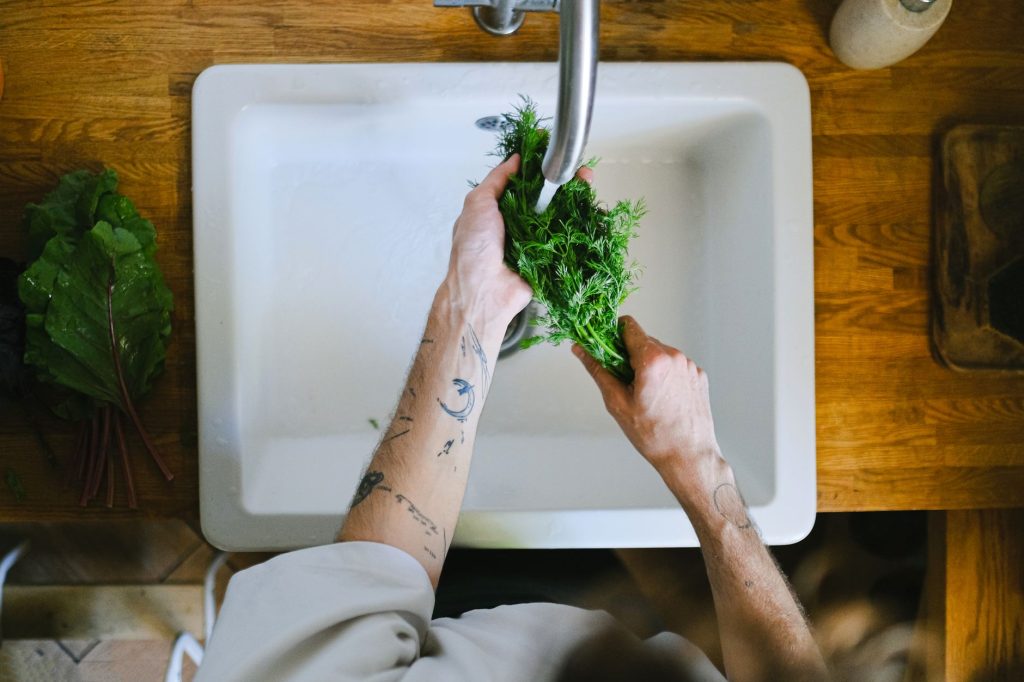
How to store fresh cilantro for the longest shelf life
The jar-in-fridge method wins because cilantro behaves more like a cut flower than a leafy vegetable. Giving the stems water to draw on slows wilting the same way it would for a bouquet. Trim about a half inch off the stems before standing them up, since fresh-cut ends absorb water better than ones that have already sealed over.
Jar in fridge (water method)
Use a jar or glass tall enough that the water reaches the bottom inch or two of stem without touching the leaves. Cover the top loosely with a produce bag instead of sealing it, since the leaves need some airflow to avoid trapping moisture. Expect 10 to 14 days before the outer leaves start yellowing. A check that confirms it’s still good: the stems should feel firm and the water should look clear, not cloudy. Swap the water every 3 to 4 days.
Damp-towel method
This is the better option when fridge space is tight or a jar of water isn’t practical. Lay the bunch on a paper towel that’s damp but not dripping, roll it loosely, and slide it into a bag or container with the lid slightly ajar. Plan for 5 to 7 days. Check the towel halfway through: dry out and it speeds up wilting, too wet and it invites mold, so aim for damp like a wrung-out sponge.
Frozen in oil
Freeze in oil when you know the bunch won’t get used raw within the week. Chop the cilantro finely, pack it into ice cube tray cavities, top each one with a neutral oil, and freeze until solid before bagging the cubes. This holds for 4 to 6 months, but the thawed result is soft and oily, suited to being dropped straight into a hot pan rather than scattered fresh over a dish. Freezing trades raw texture for shelf life in most produce, not just herbs; the same trade-off shows up in Can You Freeze Mushrooms? Raw vs Blanched vs Sautéed Grid, where the raw bite never fully returns either. A dedicated silicone tray makes the cubes easier to pop out and keeps portions consistent; something like a silicone tray with a lid also keeps freezer odors out of the cubes while they sit.
For a similar green, stem-forward item compared across the same three approaches, the breakdown in How to Store Green Onions: Jar, Towel, Crisper & Freezer follows the same logic and is a useful side-by-side.
Which method fits your timeline
Skip the guesswork and match the method to how soon the cilantro will actually get used.
- Using it today or tomorrow: Any method works. A glass of water on the counter is enough.
- Using it within a week: Damp-towel wrap in the crisper, about 5 to 7 days.
- Using it within two weeks: Jar of water in the fridge, stems trimmed, loosely covered, about 10 to 14 days.
- Using it within a month or longer: Chop and freeze in oil now. Waiting means the bunch wilts before it gets used.
What changes the number
- Freshness at purchase: A bunch that was already a few days old when bought falls at the short end of every range above, regardless of method.
- Fridge temperature and humidity: The USDA Food Safety and Inspection Service recommends keeping refrigerators at 40°F or below to limit bacterial growth. A crisper drawer running at or near that temperature also slows herb wilting, while a warmer shelf near the door shortens every window above.
- Moisture on the leaves: Washing before storing, rather than right before use, traps surface moisture and speeds up rot. Store it dry and wash only what’s about to be used.
- Container choice: A fully sealed bag or airtight jar traps humidity against the leaves and can shorten shelf life compared with one that allows some airflow.
- How it’s frozen: Freezing in oil versus freezing dry changes both the shelf life and what the thawed cilantro is good for. Oil-frozen cubes are strictly a cooked-dish ingredient.
Common mistakes
- Sealing the jar method airtight. A fully closed bag over the jar traps condensation on the leaves and speeds up sliminess. Leave it loose.
- Storing cilantro wet. Rinsing the whole bunch and bagging it without drying is one of the fastest ways to get a slimy mess within two days.
- Expecting frozen cilantro to work as a garnish. Both freezing methods change the texture permanently. Frozen cilantro belongs in the pot, not on top of the bowl.
- Freezing in a container that isn’t freezer-safe or well-sealed. Oil cubes pick up freezer odors fast if the bag isn’t sealed well; a quality freezer-safe zip bag with the air pressed out helps the flavor hold for the full 4 to 6 month window.
- Ignoring the stems. Trimming a fresh cut before standing the bunch in water matters more than people expect, since a stem that sealed over days ago won’t absorb water well.
Troubleshooting: cilantro that’s already wilting
If the leaves have gone limp but aren’t slimy or discolored, trim the stem ends fresh and stand the bunch in cold water for 30 to 60 minutes before storing. Many bunches perk back up once the stems can draw water again; the check is simple, the leaves should firm up and lose that droop. If the leaves are yellow, black, or slimy, that part is done. Pull those stems out rather than storing the whole bunch together, since one bad stem speeds up decay in the rest.
FAQ
How long does fresh cilantro last in the fridge?
With the jar-in-water method, expect roughly 10 to 14 days. Wrapped in a damp towel, plan on about 5 to 7 days. Left loose in a bag with no moisture management, it typically turns within 2 to 4 days.
Can you freeze fresh cilantro?
Yes. Frozen in oil in ice cube portions, it holds for about 4 to 6 months and works well dropped into soups, sauces, and sautes. Frozen dry without oil lasts roughly 3 to 4 months but turns mushy on thaw, so it’s best added directly to hot dishes rather than thawed first.
Why does my cilantro go slimy so fast?
Slime usually means trapped moisture, either from washing before storage without drying thoroughly, or from a sealed container with no airflow. Store it dry, loosely covered, and wash only what’s being used right before use.
Is it better to store cilantro stems-down in water or wrapped in a towel?
Stems-down in water generally outlasts the towel method by several days because the stems keep drawing up moisture the way cut flowers do. The towel method is a reasonable fallback when fridge space or a spare jar isn’t available, but expect a shorter window.
Bottom line
For cilantro that will get used within two weeks, trim the stems and stand the bunch in a jar of water in the fridge with a loose bag over the top. For anything that won’t get used within a week, chop and freeze it in oil so it’s ready to go straight into cooked dishes months later. Skip plain bagging at room temperature or sealing it tight with no moisture control, since that combination is the one most likely to leave a slimy bunch by the weekend.