Quick Recipe Finder is a participant in the Amazon Services LLC Associates Program. If you buy through links on this page we may earn a commission, at no extra cost to you. Cooking times are guidance and vary by appliance. Always confirm doneness with a thermometer against USDA safe minimum internal temperatures.
Dairy-free heavy cream substitutes are not interchangeable. Some whip into stable peaks for topping a pie, some hold together in a simmering sauce, and some will break into watery curds the second they hit heat. Picking the wrong one for the job wastes the dish, not just the cream.
Quick answer: Full-fat canned coconut cream, chilled overnight, whips closest to dairy heavy cream and holds up in hot reductions if you simmer it gently. Commercial pea-protein or oat-based heavy cream alternatives also reduce well. Soy creamers and nut milks split in heat and work only as a coffee lightener.
| Substitute | Whips to stiff peaks? | Holds in hot reduction (200F+) | Best use | Approx. fat content |
|---|---|---|---|---|
| Full-fat canned coconut cream (chilled) | Yes, with a stabilizer like powdered sugar or cornstarch | Yes, at a gentle simmer; avoid a rolling boil | Whipped topping, curries, cream soups | 20-24% |
| Commercial pea-protein heavy cream alternative | Yes, most brands are formulated to whip | Yes, this is their main selling point | Sauces, soups, whipped topping | Varies by brand, check the carton |
| Oat-based heavy cream alternative | Some brands, inconsistently | Generally yes at moderate heat | Creamy pasta sauces, chowders | Varies by brand |
| Cashew cream (soaked and blended) | No, it stays soft | Yes, very stable in heat | Thickening sauces, soups, baked dishes | Depends on nut-to-water ratio |
| Canned coconut milk (not cream) | No, too thin | Mostly yes, but thinner than cream | Light sauces, soups | Around 17-19% |
| Soy creamer (coffee style) | No | No, prone to curdling with acid or high heat | Coffee, tea | Low fat, not a cream equivalent |
| Almond or oat milk (plain) | No | No, will separate | Coffee, cereal, thin batters | Low fat |
Which Dairy-Free Creams Actually Whip
Whipping requires fat, and enough of it to trap air in a stable structure. Dairy heavy cream does this at roughly 36% fat. Most dairy-free options fall short of that on their own, which is why the ones that whip reliably either start higher in fat or include a stabilizer.
Coconut cream
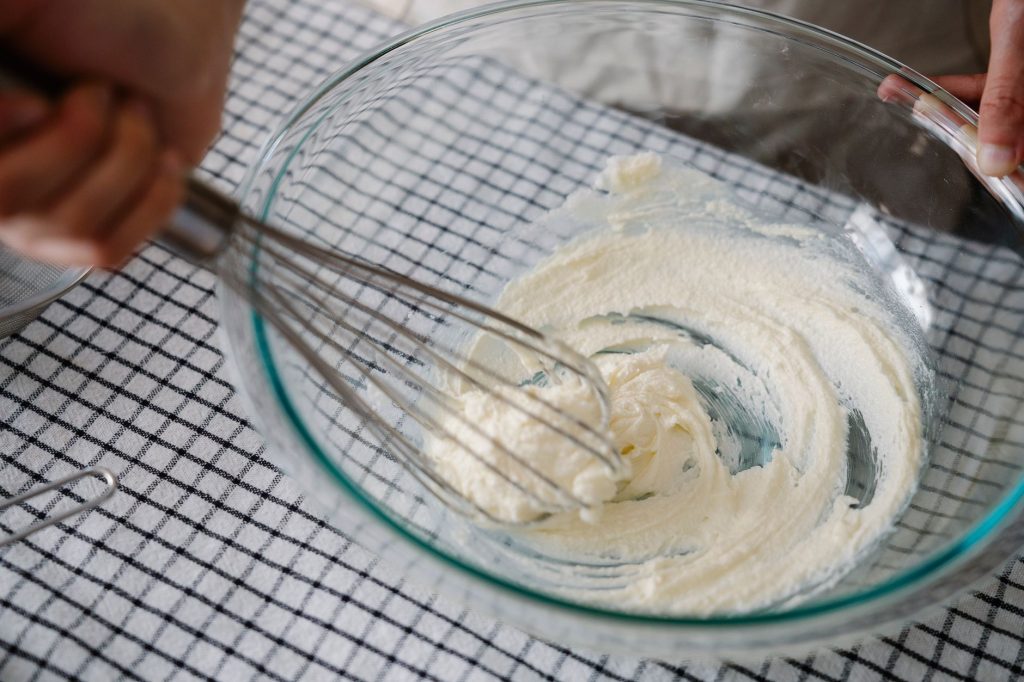
Chill a can of full-fat coconut cream (not coconut milk) overnight so the fat solidifies and separates from the water. Scoop only the solid cap and whip it the way you would dairy cream. It tends to firm up fast and can go grainy if overbeaten, so check texture often rather than running the mixer on a timer. A hand mixer gives more control here than a stand mixer running at full speed.
Commercial heavy cream alternatives
Several pea-protein and oat-based products are sold specifically as whipping cream replacements. These are engineered products, so performance varies by brand and even by batch. If a brand claims it whips, that is a formulation choice, not a universal trait of oat or pea cream, so do not assume a different brand behaves the same way.
Which Ones Hold in a Hot Reduction Without Splitting
Splitting happens when fat and protein separate under heat, usually made worse by high heat, acid, or salt added too early. The creams that hold up best in a reduction are the ones with either a high enough fat content to stay emulsified or a starch-based thickener built in.
Coconut cream and coconut milk
Both reduce reasonably well in a simmering sauce. Keep the heat at a gentle simmer rather than a boil, and add acidic ingredients like wine or citrus toward the end rather than at the start. A heavy-bottomed saucepan helps distribute heat evenly and lowers the chance of a hot spot scorching the cream before it can reduce smoothly.
Cashew cream
Blended cashew cream is one of the most heat-stable dairy-free options because it thickens from the nut solids rather than relying on a fat emulsion the way dairy cream does. It will not whip, but it holds beautifully in a simmering sauce and can be adjusted thinner or thicker with water.
Commercial oat and pea-based creams
Many are formulated for cooking specifically, with gums or starches added to prevent splitting. Check the label for “cooking” or “barista” versus “whipping” formulations, since the same brand sometimes sells different versions for different jobs. For a side-by-side look at how several dairy-free creams behave specifically in pasta sauces, see Heavy Cream Substitute for Pasta: Ranked by Split Risk.
Which Ones Are Only Fit for Coffee
Soy creamers, almond milk, and oat milk marketed as coffee creamers are built for pouring over something already hot and mostly still, not for sustained cooking heat. They are too low in fat to emulsify in a sauce and too thin to whip. Save these for coffee, cereal, or thinning a batter where body does not matter.
Dairy Free Heavy Cream Substitute: What Changes the Outcome
The right choice depends on more than the label on the carton.
- Fat content: Higher fat generally means better whipping and better heat stability. Check the nutrition label rather than assuming based on the plant source.
- Added stabilizers: Gums, starches, and proteins added by the manufacturer change how a product behaves in heat far more than the base ingredient does.
- Acidity in the recipe: Wine, tomato, citrus, and vinegar all raise split risk. Add these before the cream when possible, or add the cream last and keep heat low.
- Cooking temperature: A simmer around 180-200F is generally safer for dairy-free creams than a rolling boil, though exact tolerance varies by product.
- Brand formulation: Two oat creams from different brands can behave completely differently under heat. Treat brand claims as a starting point, not a guarantee, and watch the pot the first time you use a new one.
Common Mistakes
- Using coconut milk when the can says cream, or the reverse. They are not the same product and behave very differently in both whipping and reduction.
- Adding the substitute too early in a hot pan. Lower heat and a later addition reduce split risk across almost every option.
- Expecting a cooking-formulated cream to whip, or a whipping cream to reduce cleanly. Check the label’s intended use before buying for a specific job.
- Overbeating coconut cream. It firms up faster than dairy cream and can turn grainy if you keep whipping past stiff peaks.
- Boiling instead of simmering. A hard boil is the single most common cause of a dairy-free cream breaking in a sauce.
FAQ
What is the closest dairy-free substitute to heavy cream?
Full-fat canned coconut cream, chilled so the solids separate, is generally considered the closest match for both whipping and cooking, though it carries a mild coconut flavor that some dishes will mask better than others.
Can you whip dairy-free creamer?
Standard dairy-free coffee creamers are too low in fat to whip. Look specifically for a product labeled as a whipping cream alternative, or use chilled full-fat coconut cream instead.
Does dairy-free cream curdle in soup?
It can, especially with high heat or added acid. Lower-fat options like plain almond or oat milk are the most prone to curdling. Higher-fat coconut cream, cashew cream, or a commercial cooking-formulated cream are more heat-stable choices for soup.
What is a good substitute for heavy cream in coffee?
Any dairy-free coffee creamer, oat milk, or almond milk works fine for coffee since there is no reduction or whipping involved. For a wider comparison of dairy-free milks by job, see Dairy Free Milk Substitute: Best Pick by Job.
Practical Recommendation
For whipped toppings, start with chilled full-fat canned coconut cream and a hand mixer for better control than a stand mixer at full speed. For hot sauces and reductions, reach for cashew cream or a commercial cooking-formulated oat or pea cream, and keep the pan at a simmer rather than a boil. Save soy creamers and plain nut milks for coffee, where their thin body and low fat are not a problem. If the recipe also calls for evaporated milk, check Dairy Free Evaporated Milk Substitute: Reduction Ratios by Recipe for the matching ratios before you start cooking.
Tool worth having on hand: an electric hand mixer for better control when whipping coconut cream past the point where a stand mixer tends to overshoot.